
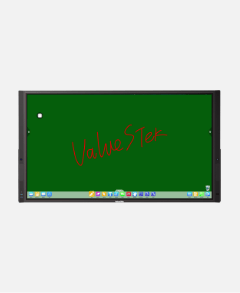
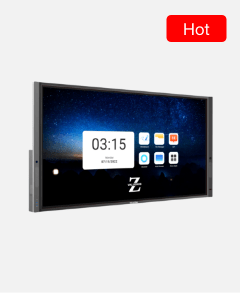
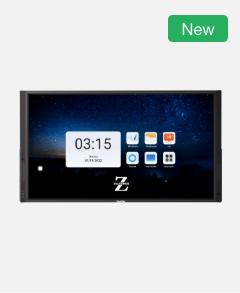
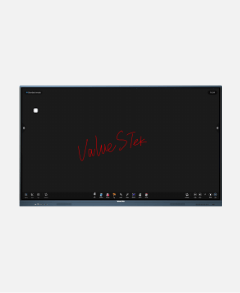









ValueKnob – breaking through the interaction limitations of interactive flat panel displays!!
ValueSTek’s IFP (Interactive Flat Panel) with an Intelligent ValueKnob Technology Obtains National Patent and Redefines a New Paradigm for Efficient Operation
1.The background of the interactive flat panel industry
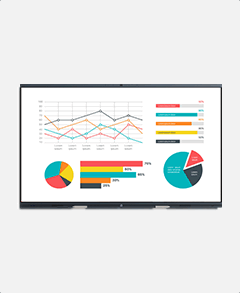
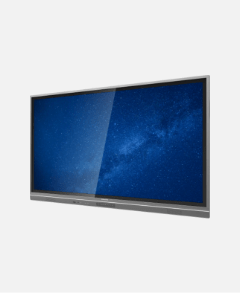
In today’s fast-moving digital era, the interactive flat panel (IFP) has become an indispensable core device in teaching, conferencing, and office scenarios. With large screens ranging from 55 to 110 inches and intuitive touch interaction, it enables more direct information display and engagement. However, as usage scenarios continue expanding and operational demands become more complex, the limitations of traditional single-touch interaction have gradually emerged. Low efficiency, inconvenient operations, and frequent mis-touches have become key issues that restrict user experience.
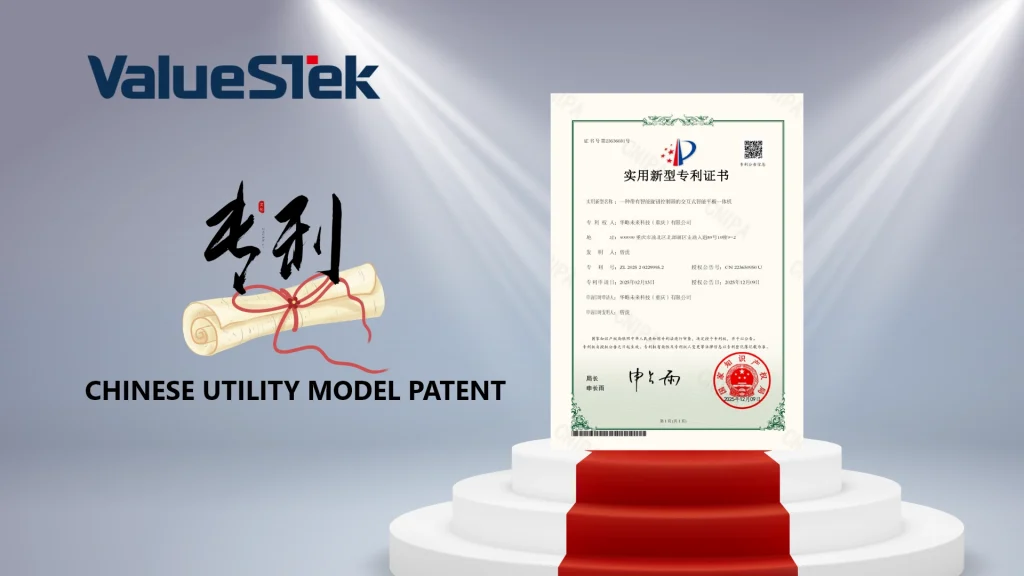
Against this backdrop, ValueSTek, based on deep user research and repeated rounds of development and testing, successfully launched the technology “An Interactive Flat Panel Equipped with an Intelligent Knob Controller,” which has officially received national patent certification. This patented innovation has been successfully applied in the ValueHub Art Series interactive flat panel (IFP) products. By integrating a physical knob controller with traditional touch operation, the technology brings a breakthrough interaction method to the IFP industry and redefines a new paradigm for efficient operation of large smart devices.
1.1 The pain points in the interactive flat panel display industry highlight the necessity of upgrading interaction methods.
In recent years, the interactive flat panel (IFP), with its high integration and visualization advantages, has continuously deepened its applications in education, enterprise, and government sectors. Particularly, large-size IFPs—with their stunning visual effects and convenient touch experience—have become preferred devices in meeting rooms, classrooms, exhibition halls and other scenarios. However, in practical use, the drawbacks of single-touch operation have gradually surfaced, causing inconvenience for users.
1.2 Operational Efficiency Issues
Traditional touch operation requires clicking icons step by step to complete actions. It usually relies on one hand and does not support dual-hand collaboration, significantly reducing efficiency. For example, designers frequently switch tools and adjust parameters in drawing software. With touch-only input, they must repeatedly clicks in different areas of the screen, making the process cumbersome. Teachers using PPT in classrooms must precisely tap hidden menus to switch slides or add annotations. This not only wastes class time but may also interrupt presentations due to mis-operations.
1.3 Precision Control Limitations
Touch interaction lacks accuracy for fine numerical adjustments. Whether adjusting device parameters such as volume and brightness or setting specific values in software, users must tap multiple times to reach the target value, making both precision and convenience insufficient. Most software interfaces—designed for small displays—place menus in the upper-left corner. For large interactive flat panel (IFP) with diagonals measuring several meters, users must repeatedly move between distant screen locations, which is time-consuming and tiring.
1.4 Compatibility Limitations
Current interactive flat panel (IFP) use on-screen keyboards instead of physical keyboards, preventing users from using many efficiency-boosting keyboard shortcuts. Many professional applications rely heavily on shortcuts, and touch-only interaction cannot meet their needs. Additionally, touchscreens lack the precise sliding control of a mouse, resulting in high error rates when browsing files or adjusting pages.
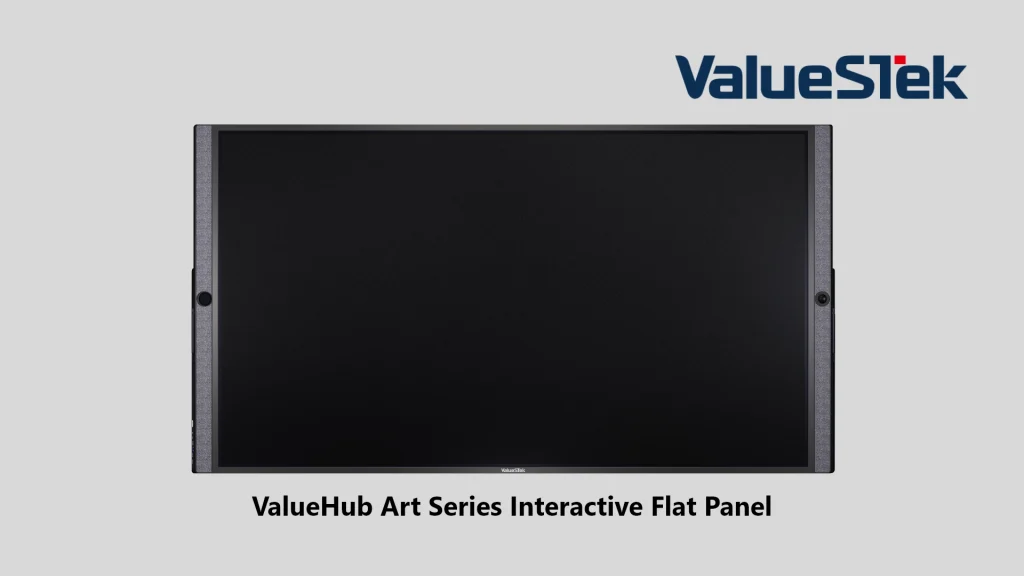
2. Patented Technological Breakthrough Redefines interactive flat panel (IFP) Interaction Logic
ValueSTek’s patented technology provides a perfect solution to compensate industry pain points. The technology innovatively adds an intelligent knob controller to the interactive flat panel (IFP), integrating physical shortcut-based interaction with touch control to create a dual-mode system: “Touch + Knob.” This fundamentally enhances operational efficiency and user convenience.
Technical Architecture: Coordination Between Hardware and Software
The patented system is composed of three main modules:
1. Intelligent Knob Controller
2. Driver Program
3. IFP Main Unit
2.1 interactive flat panel (IFP) Main Unit
The interactive flat panel (IFP) integrates an Android host, OPS computer (Windows system), touchscreen, display panel, speaker, camera, microphone, and IoT terminal. It delivers strong computing and display capabilities and supports dual-system operation for different application needs.
2.2 Intelligent ValueKnob Controller
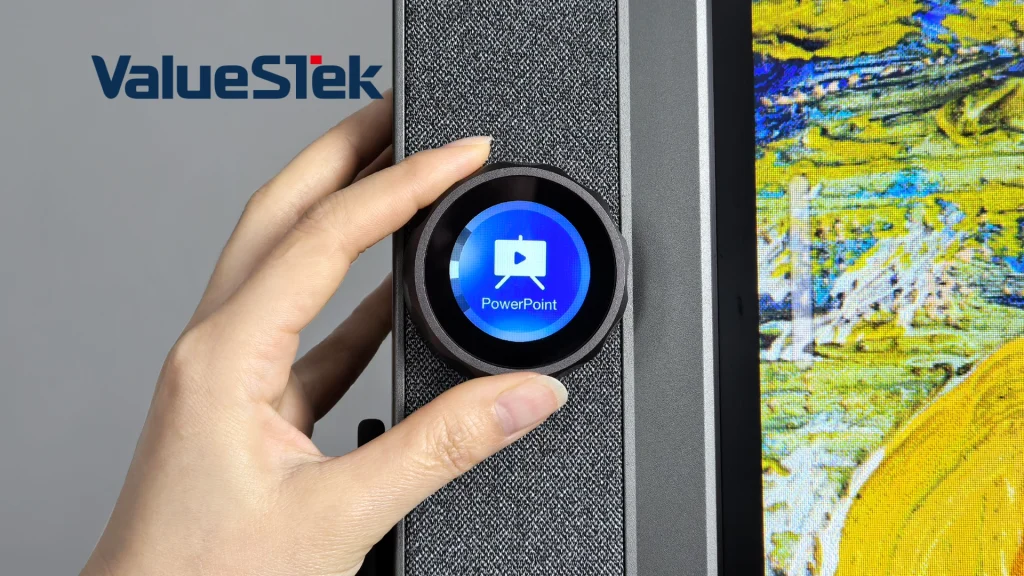
The controller features a mechanical structure consisting of a knob switch, circular display, main control chip, and communication module. Positioned ergonomically on the left side of the screen, it enables left-hand knob operation and right-hand touchscreen operation for efficient two-hand collaboration. The knob supports rotation, pressing, and blind operation, and the circular screen provides real-time information such as current mode, function options, and device status.
2.3 Driver Program
Installed on the Android host, it converts serial-port commands into keyboard clicks, shortcut combinations, or device control instructions. It synchronizes instructions to the OPS computer and supports command configuration and customization.
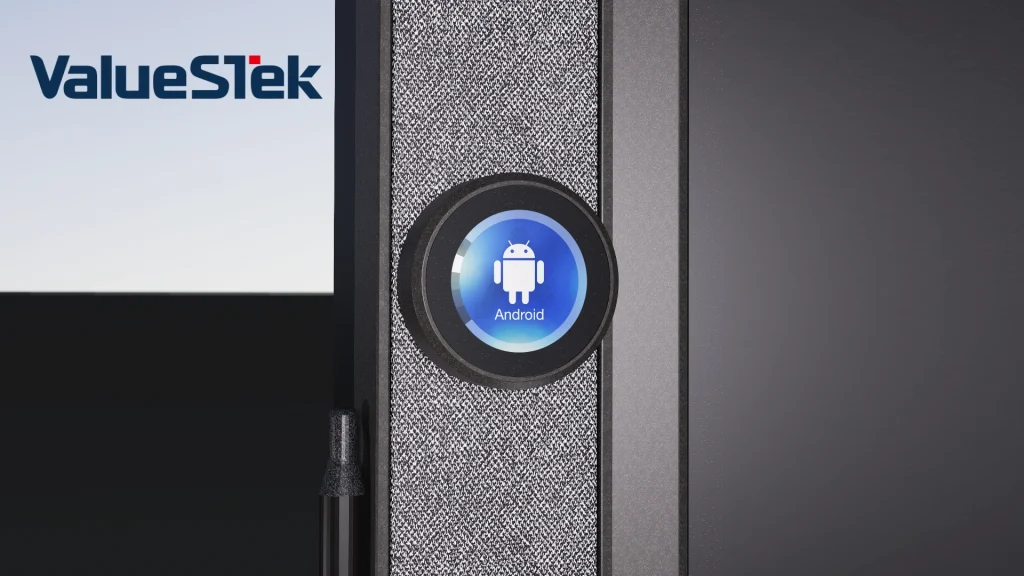
3. Core Functional Highlights
3.1 Device Control
The knob enables power on/off, volume and brightness adjustment, and lighting configuration with real-time numeric display.
3.2 System Control
Android system functions include home, cursor movement, confirm/back, annotation, and multitasking view.
Windows system functions include magnifier zoom, page up/down, screenshot and annotation, on-screen keyboard access, and desktop view.
3.3 Application Control
For PPT, the knob supports starting slideshow, page up/down, annotation, clearing annotations, and ending slideshow.
3.4 External Device Control
The knob can control camera panning, tilting, zooming, tracking, preset positions, and microphone mute/ unmute, supporting conferencing and broadcasting needs.
3.5 Patent-Backed Advantages Leading the Industry
The dual-interaction mode enables higher efficiency through two-hand collaboration. Mechanical blind operation allows users to quickly input commands without searching for menus. The system is highly compatible with mainstream software and supports customization. Ergonomic mechanical design enhances comfort and reduces fatigue. The solution delivers high reliability, low maintenance cost, and strong cost-effectiveness.
3.6 Wide Application and Support for Digital Transformation
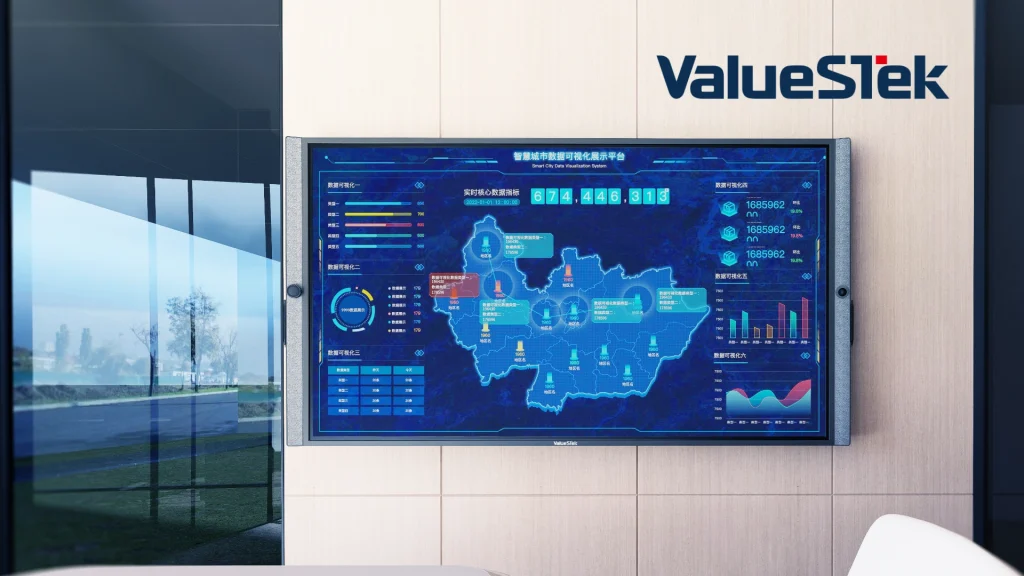
The technology is widely used in education, enterprise, government, and exhibition sectors. In education, it enhances teaching efficiency and interaction. In enterprise environments, it improves meeting fluency and professional workflows. Government service centers benefit from reduced mis-operation rates and improved user experience. Exhibition venues gain more intuitive content browsing and interactive engagement.
4. Continuous Innovation: ValueSTek Leading Future Development
As an innovative company focused on the development of intelligent interactive devices, ValueSTek has always been user-oriented, adhering to technological innovation and product upgrades. The technology of “An Interactive flat panel with an Intelligent Knob Controller” has recently been awarded a national patent, which is a concentrated reflection of the company’s R&D strength and an important achievement in its deep cultivation of the intelligent interaction field.
In the future, ValueSTek will continue to increase R&D investment, constantly optimize the functions and performance of the intelligent knob controller, and expand its application scenarios. The company plans to further enhance the intelligence of the smart knob by incorporating features such as voice control and gesture recognition to create a multi-modal interaction model; strengthen cooperation with various application software providers to achieve automatic command adaptation, improving technical compatibility and ease of use; and expand the technology’s applications to provide efficient and convenient interaction solutions for more industries.
At the same time, the company will use this patented technology as the core to launch more series products to meet the usage needs of different sizes and scenarios, enabling more users to enjoy the convenience brought by technological innovation. ValueSTek firmly believes that only through continuous innovation can the industry be led forward, and only by focusing on user needs can truly valuable products be created.
The national patent certification is a high recognition of this technology and also serves as motivation for ValueSTek to keep moving forward. Amid the wave of digital transformation, ValueSTek will use innovation as its sail and technology as its oar, continuously breaking industry bottlenecks, contributing more to the development of the intelligent interactive device industry, and leading the industry toward a more efficient, convenient, and intelligent future.
5.learn more
To learn more about how to use ValueKnob, please see the following link: